
La seguridad, la confiabilidad y la robustez son características que han impulsado a Ipanema durante más de 50 años. Garantizar que su aeronave supere las expectativas, ofrezca un alto rendimiento y genere la máxima productividad en el campo es nuestro papel.
Migrar su operación a una aplicación aérea tiene varias ventajas. La aviación es mucho más simple de lo que imagina.
Aprenda a continuación lo que un avión Ipanema EMB 203 puede hacer por usted y cómo su productividad se verá afectada positivamente.
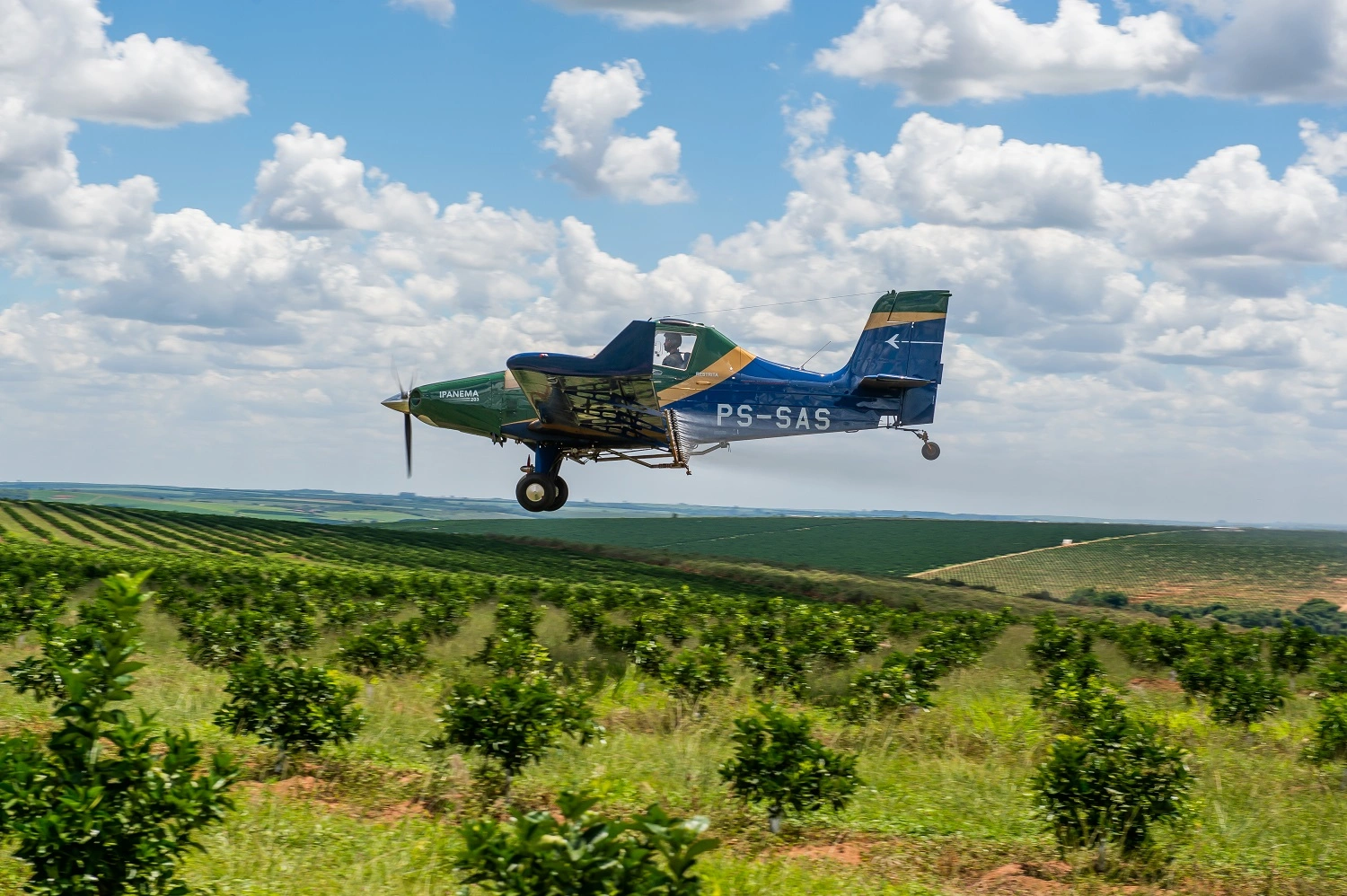
Aircraft can be equipped with modern DGPS equipment and application flow and height sensors, which guarantee the accuracy that producers expect in application. In addition, the application flight is stable, freeing the spray bar from uneven ground.
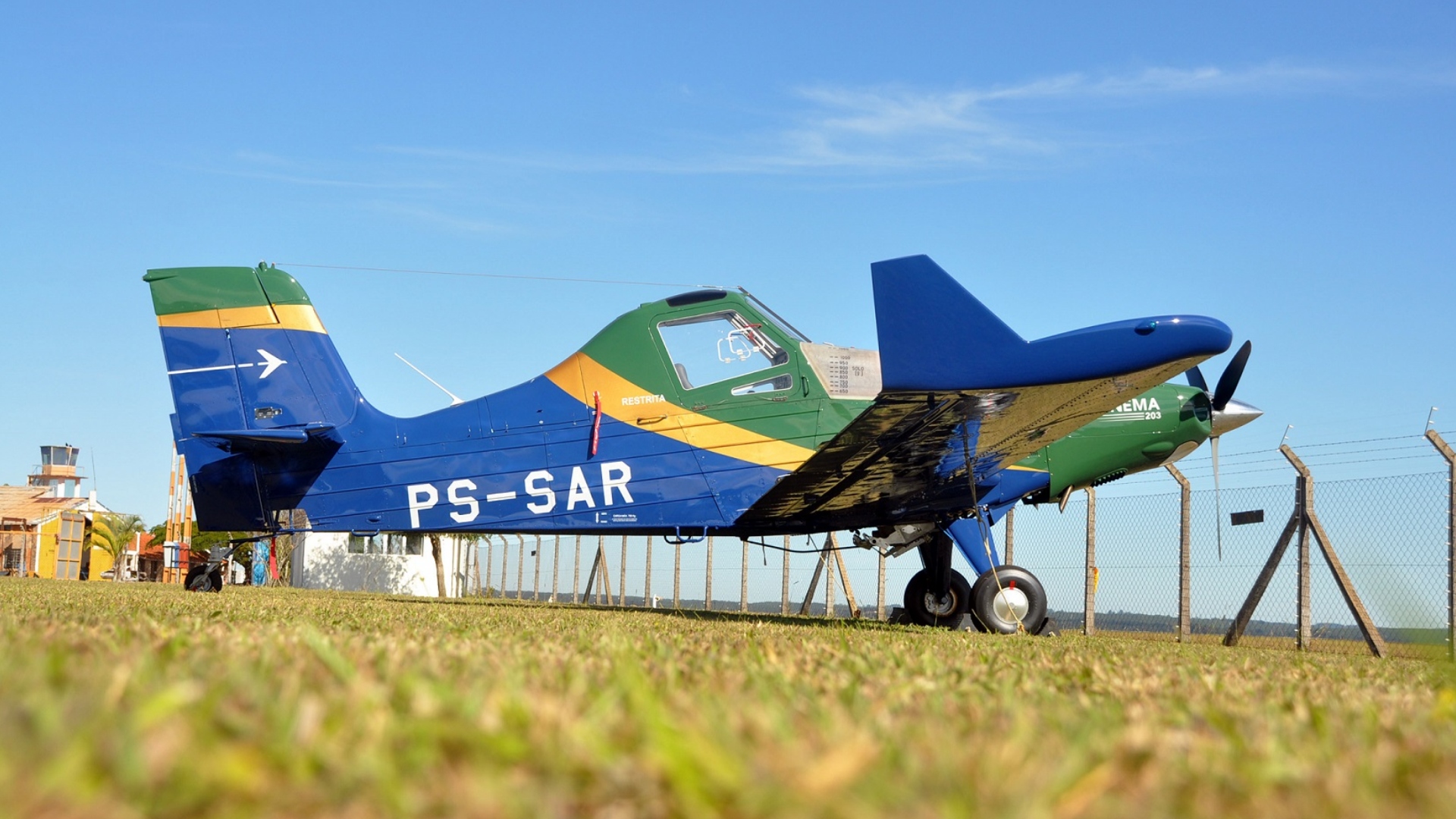
The Ipanema 203 is equipped with an exclusive winglet, an aerodynamic component at the wing tips that reduces wing tip vortices and distances them from the spray bar, ensuring minimal drift and delivering optimal application and product dispersion quality.
UNESP carried out a study on Ipanema 203 proving that, with all these advances, the aircraft delivers 24 meters of application range with ideal uniformity and quality.
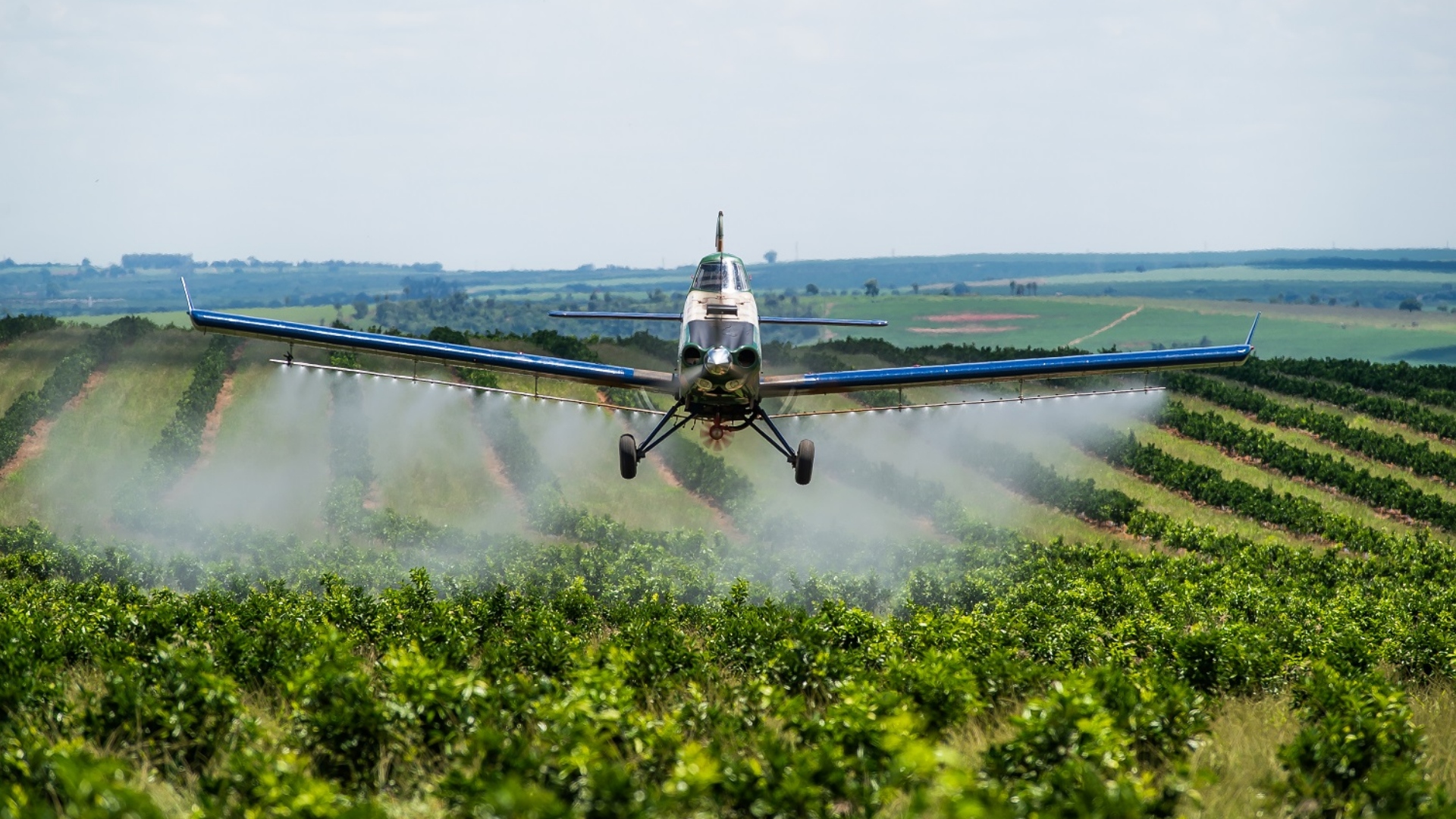
Spraying at nearly 200 km/h, unaffected by ground irregularities, the Ipanema operates uniformly and consistently. All the instruments and modern equipment installed in the cockpit provide information so that the pilot can carry out the application with excellence. Furthermore, the aircraft's maneuverability allows for agile and high-quality application in highly undulating areas or rugged terrain, where ground sprayers cannot operate.
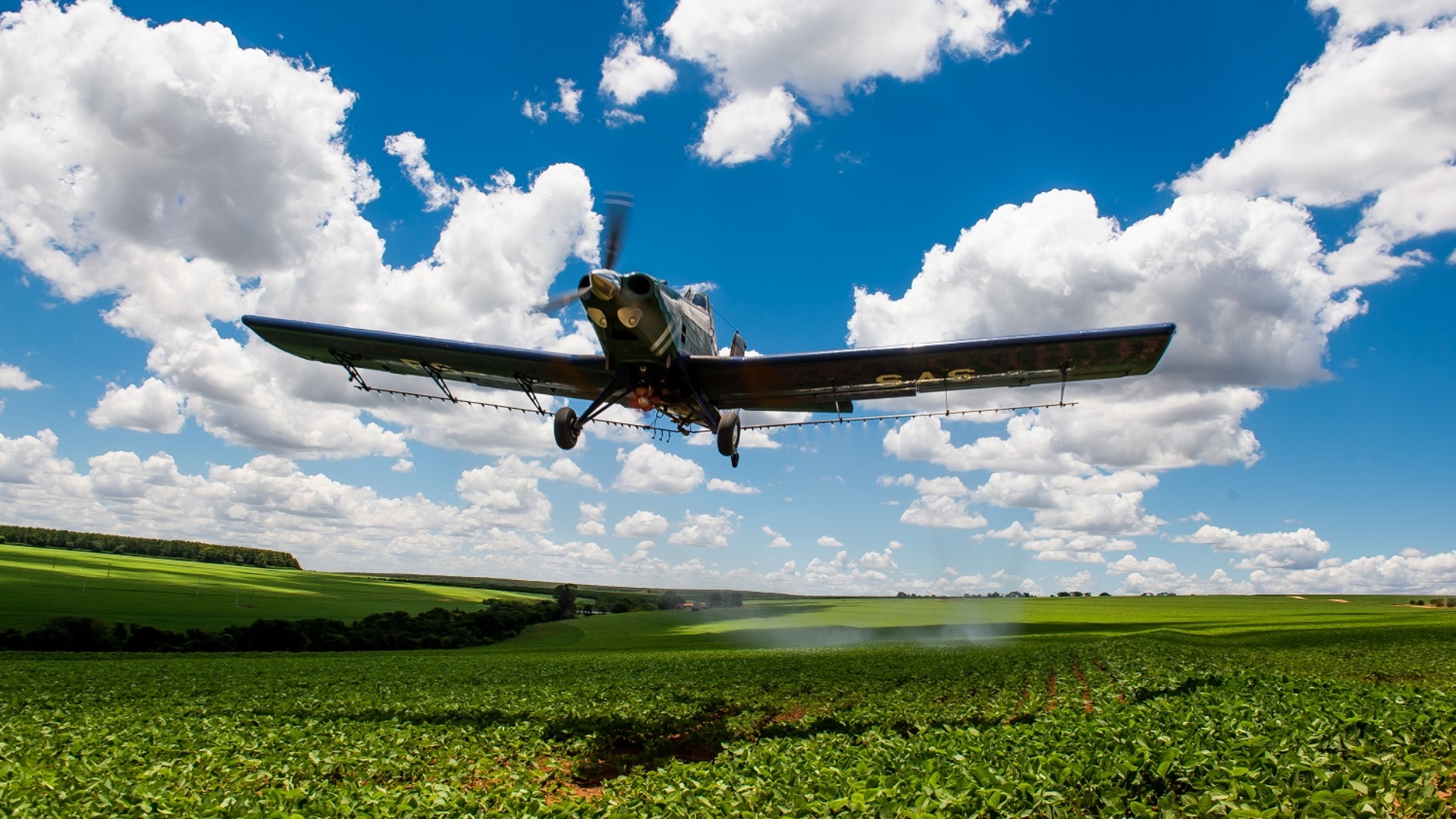
Productivity is the aircraft's greatest differentiator. Spraying a 24-meter swath with maximum deposition quality at nearly 200 km/h, the Ipanema is the best spraying solution for properties larger than 2,000 hectares, as well as for smaller properties that require urgent action. This is an advantage increasingly valued by producers who face ever-tighter spraying windows and increasingly unpredictable weather.
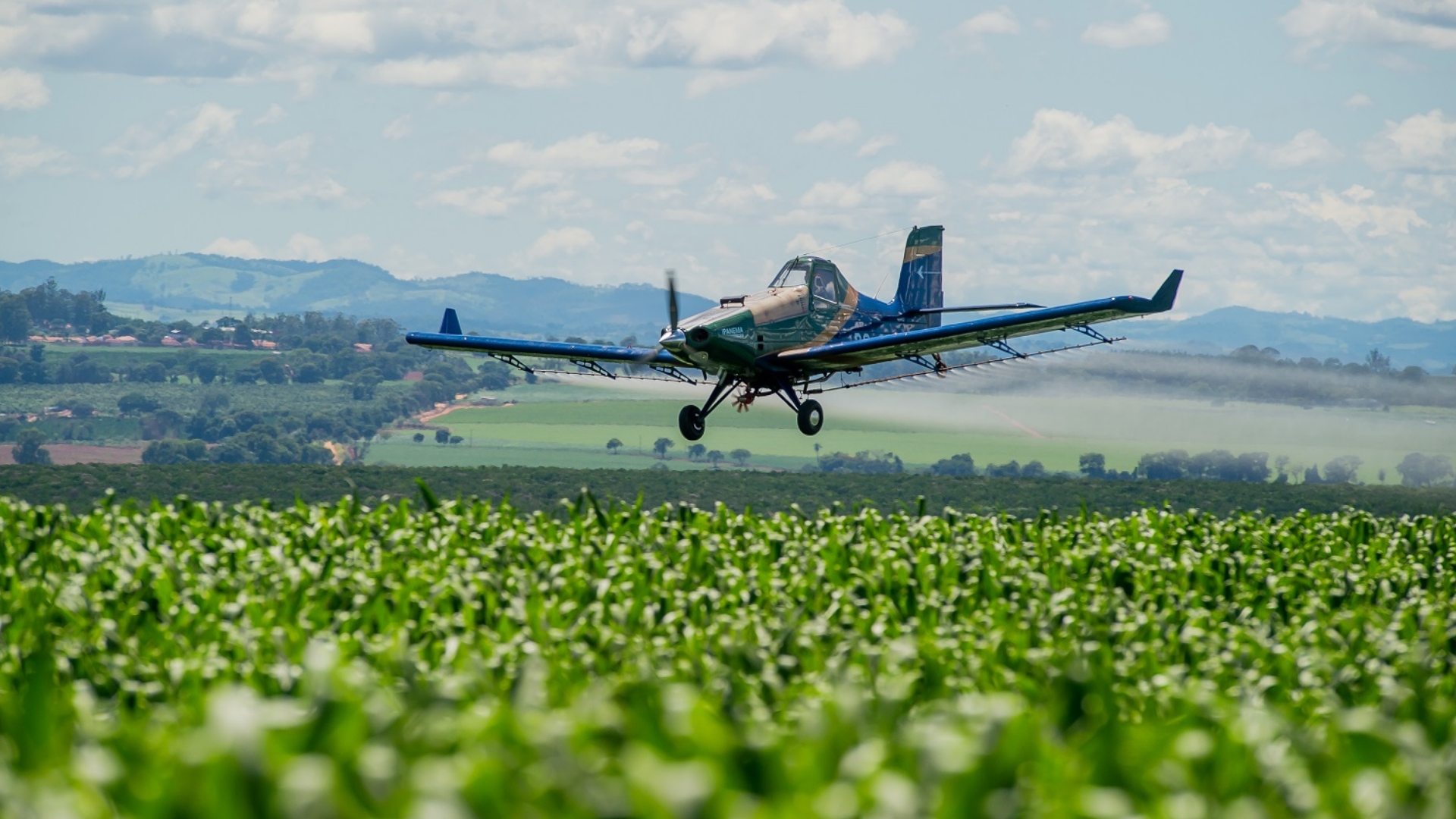
In addition to EMBRAER's excellence in aircraft manufacturing and constant design improvements that make the aircraft better every day, the 320 hp piston engine ensures a 75% lower overhaul cost than a turbo engine, as its operation and maintenance are simpler.
The extensive network of qualified Ipanema 203 maintenance service centers strategically located throughout Brazil also contributes to low maintenance costs, in addition to ensuring that aircraft return to service more quickly.
The aircraft structure is constructed from high-strength steel alloy, which ensures the robustness and safety required for the field. The aircraft is clad with aluminum panels and composite materials that deliver lightness, ease of cleaning, corrosion resistance, and performance. In addition, their systems are simple and designed for easy repair in the field, with wide availability of replacement parts throughout Brazil.
Waterlogged ground prevents ground sprayers from being used immediately after rain or during winter, but this is not the case for aircraft. Applied immediately after rainfall, Ipanema is the solution for meeting spraying windows and deadlines, with a focus on productivity and quality.
The Ipanema EMB 203 was made for the field. The aircraft does not need large infrastructure to operate. A short and unpaved runway perfectly serves the landing, takeoff and refueling of the aircraft, with a single ground support person (badeco) being sufficient.
Ipanema has been on the market for more than 50 years. During this time, in addition to various technological advances, the country has embraced agricultural aviation, and many professionals are working in the field with experience and efficiency in what they do.
Today more than 40 service centers serve Ipanema aircraft throughout Brazil. Embraer also contributes to the training of aeronautical mechanics who work in the market with aircraft familiarization courses.
Regarding pilots, key players in the agricultural aviation market, there are now more than 2,000 professionals registered with ANAC, and the number is increasing.
A study released in 2021 by UNESP proved that, based on 1,882 hectares of soybean and corn planted area, replacing ground application with Ipanema 203 is already financially viable, and for larger areas, the savings generated by Ipanema exceed 57% when compared to self-propelled sprayers. This is due to its high productivity combined with the fact that Ipanema is powered 100% by ethanol, financeable through the best credit lines, with low insurance and maintenance costs.
A land sprayer, when moving through the field, inevitably damages about 5% of the plants, about 3 bags of soybeans per hectare. With aerial spraying this does not happen, ensuring more productivity for the producer
In addition to damaging plants, a ground sprayer compacts the soil it passes through due to its weight. This soil compaction impairs all the root development of the surrounding plants, even if they have not been crushed and, with the roots impaired, grain production also suffers a drop. In this case again aerial spraying comes as a solution as there is no contact with the ground at the time of application.
In addition to having no contact with the soil, avoiding trampling and compaction, and because it has no contact with the plants, the aircraft does not contribute to the spread of diseases and pests, which inevitably occurs in ground spraying, since the wheels and parts of the tractor can touch the plant, and there may be some pathogen there that can be released in a healthy area, causing contamination in that location.
With more than 1600 units produced over 50 years, the Ipanema aircraft is the leader in the segment in the domestic market. Learn more about this experience told by our own customers.


At Embraer, we encourage a continuous search for business growth and diversification.
That is how, back in the 1980s, we expanded our product range by acquiring Indústria Aeronáutica Neiva and starting production of the Ipanema Agricultural Aircraft.
Ipanema became one of our greatest successes, a leader in the agricultural aviation sector, and in 2005 it became the first and only aircraft in the world powered by ethanol. Driven by this success, the Embraer Unit in Botucatu has grown and today employs more than 1800 people.
Embraer's activities are certified by ISO 9001, ISO 14001 and OHSAS 18001, which guarantees the quality of the products produced by it and the services provided by its team. In addition, in October 2004, Indústria Aeronáutica Neiva received certification from the Aerospace Technical Center (CTA) for the Ipanema powered 100% by hydrated alcohol (ethanol). The Ipanema is the only aircraft in the world certified to fly with this type of fuel.
Quality System certified according to ISO 9001 since April 1997 and according to AS-9100 since November 2002 by ABS - Quality Evaluations.
Environmental Management System certified according to ISO 14001 since February 2005 by ABS - Quality Evaluations.
Occupational Health and Safety Management System certified according to OHSAS 18001 since February 2005 by ABS - Quality Evaluations.
In 1954, Indústria Aeronáutica Neiva was founded in Rio de Janeiro by José Carlos de Barros Neiva, producing gliders. In 1956, he moved to Botucatu. In 1975, he started the production of light aircraft for Embraer. In 1980, Neiva was acquired by Embraer.
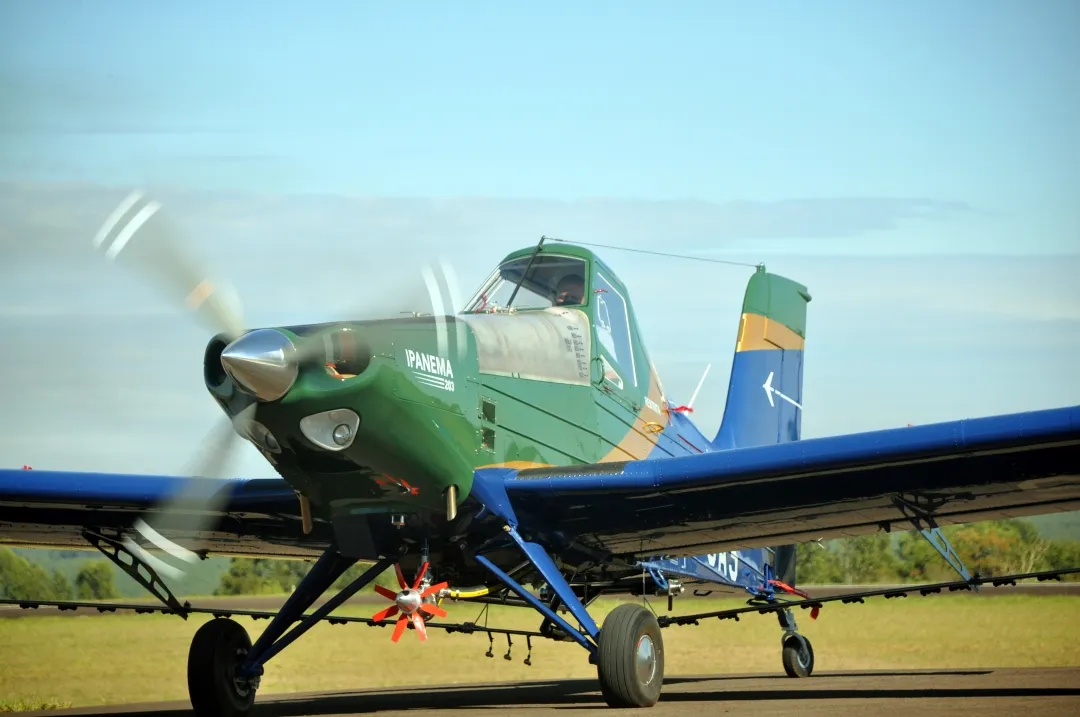
In 1982, he started the production of the Ipanema Agricultural Airplane. In 2005, it certified the first and only aircraft in the world powered by ethanol and started to produce the version of the Ipanema powered by this type of fuel (EMB 202A).
In 2006, it became an Embraer Unit. From 2007 to 2009, it underwent an expansion and today Embraer - Botucatu Unit has about 90,000 square meters and approximately 1,900 employees.

 CLOSE
CLOSE
 CLOSE
CLOSE